Barrier vs Barricade vs Longitudinal Channelizing Device: What’s the Difference?
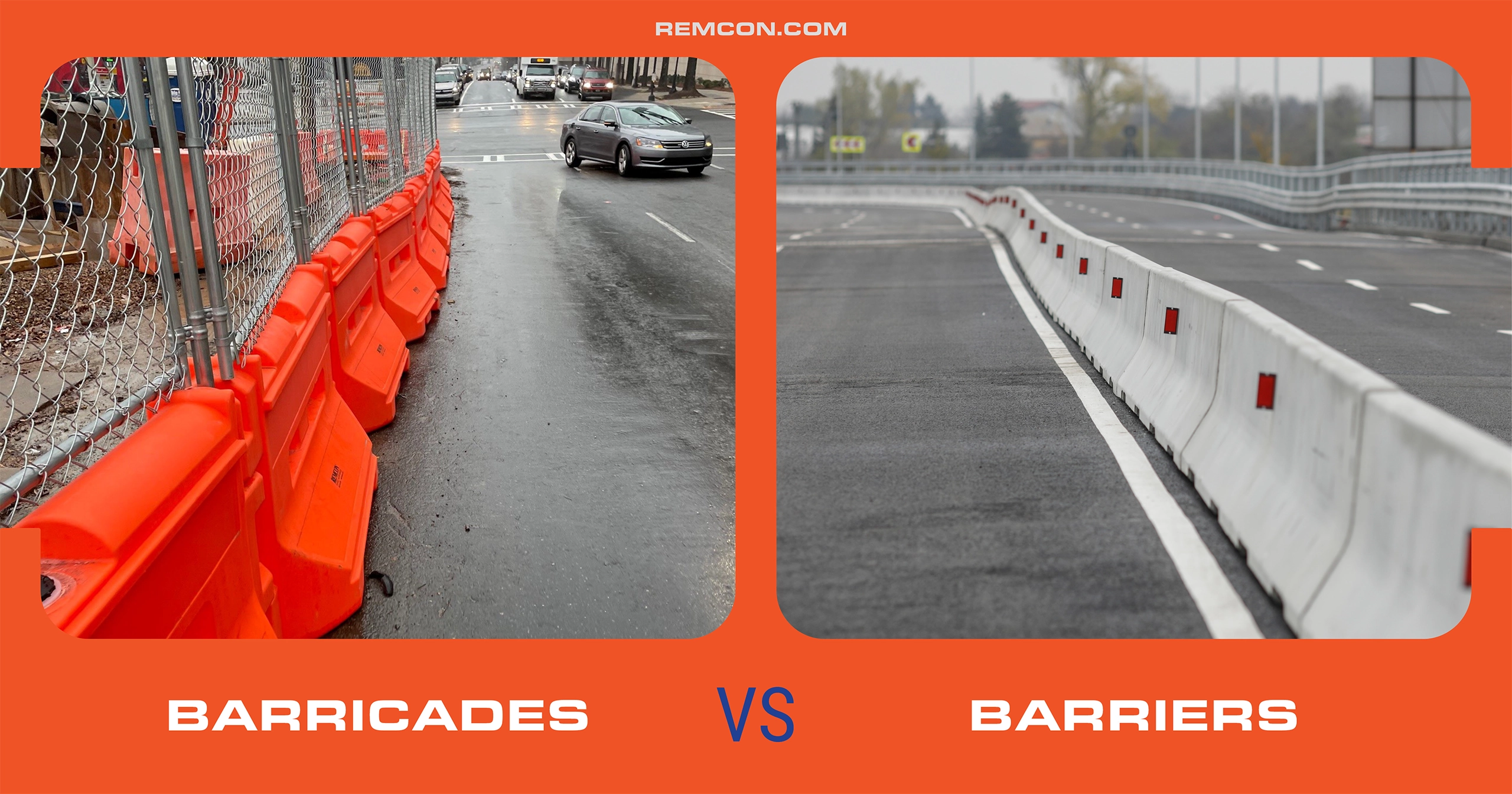
If you’ve ever driven through a work zone, you’ve seen all kinds of traffic control devices: concrete walls, orange drums, and water-filled plastic units lining the road. A lot of people call all of them “barriers.” That is understandable, but it is not technically correct.
In temporary traffic control, the terms barrier, barricade, and Longitudinal Channelizing Device (LCD) refer to different types of equipment with different jobs.
Understanding the difference helps contractors, municipalities, and project planners choose the right device for the right application.
What Is a Barrier?
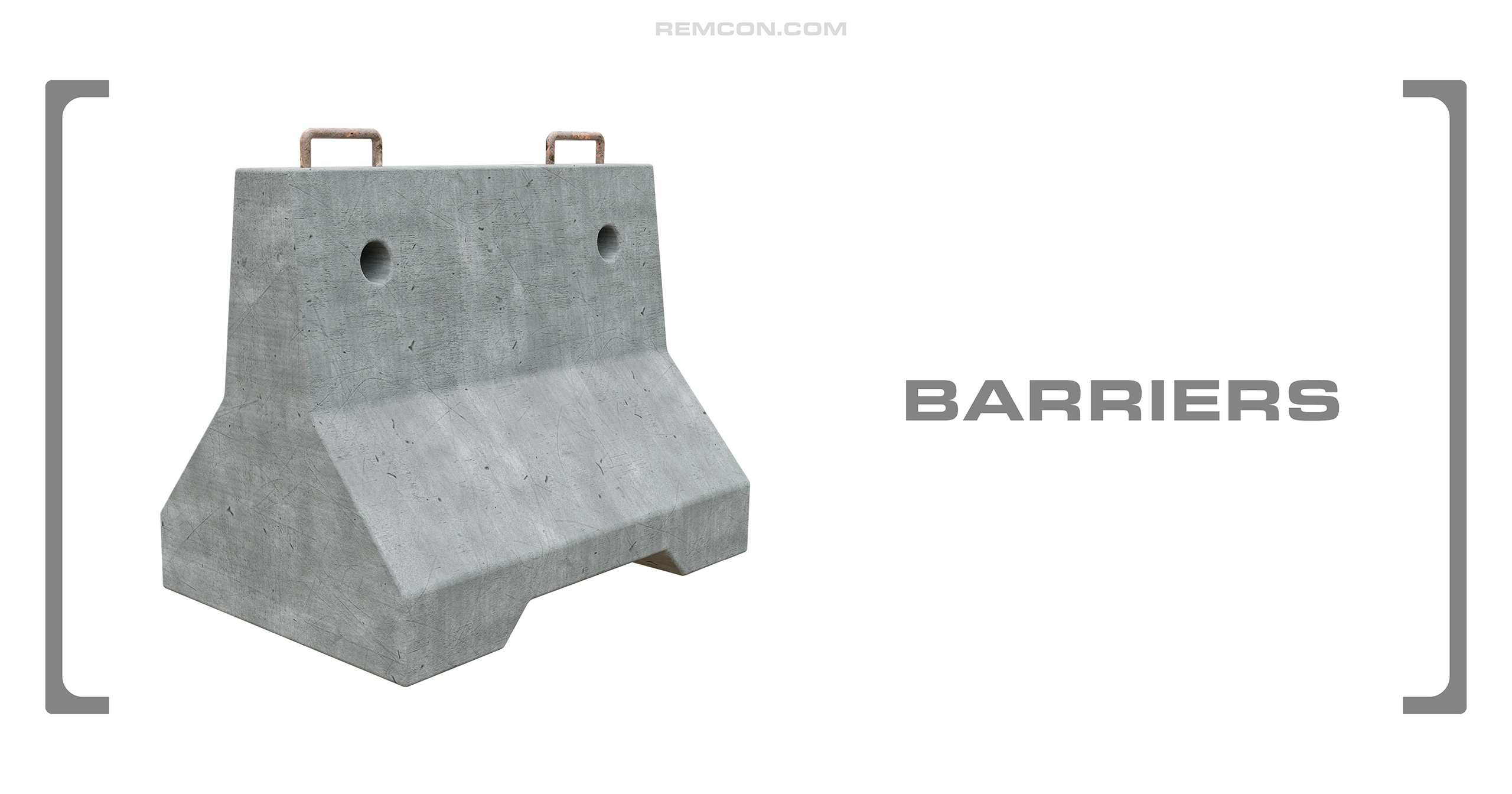
A barrier is a traffic safety device designed to stop or redirect vehicles. Its purpose is protection. Barriers are used when a work zone, roadside hazard, or crew needs physical separation from traffic.
Common examples include concrete Jersey barriers and other reinforced barrier systems designed for vehicle containment or redirection.
In simple terms: a barrier is built to take impact and help keep vehicles out of protected areas.
What Is a Barricade?
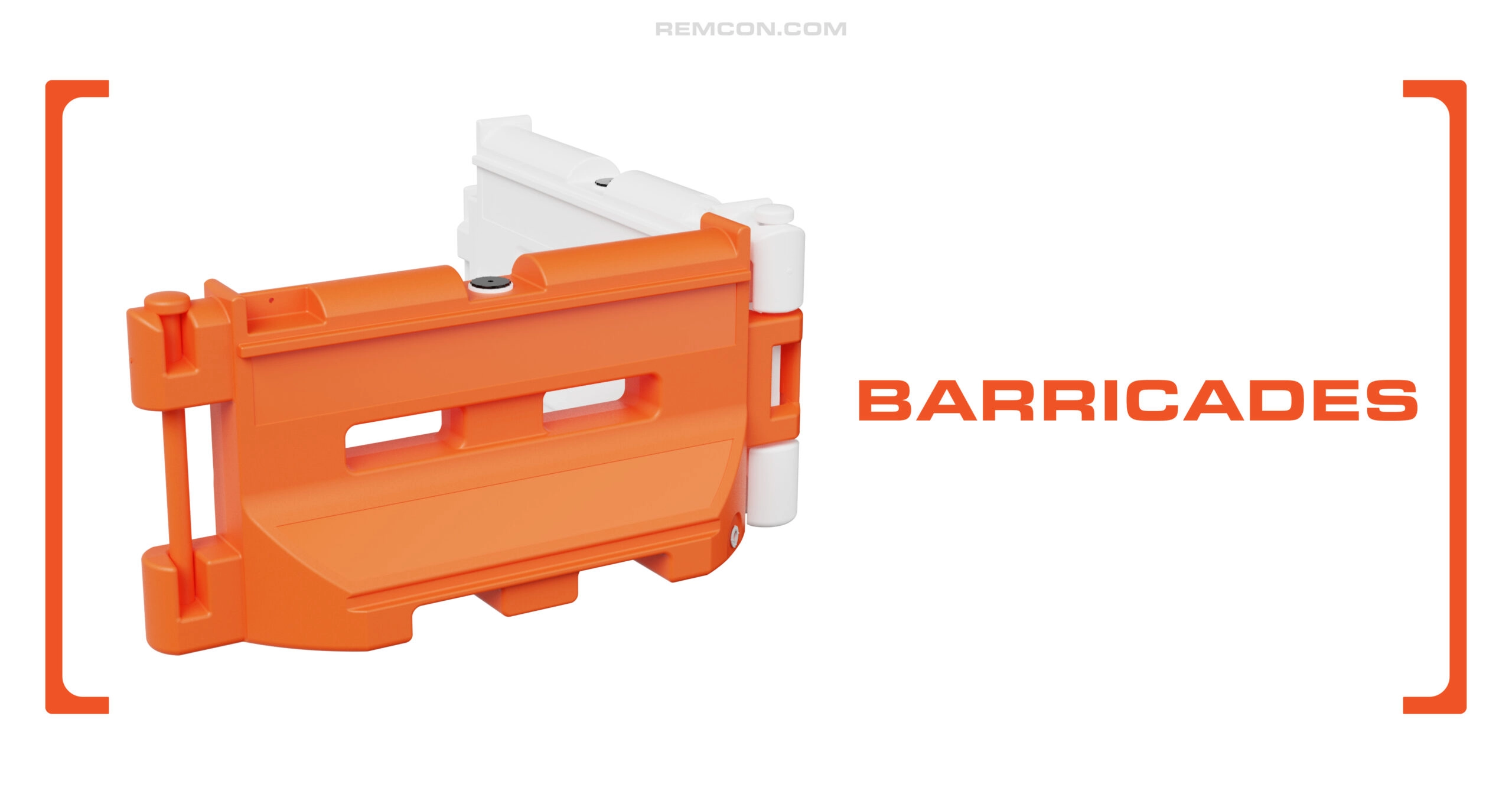
A barricade is a lightweight traffic control device designed to warn drivers and guide traffic. Barricades are used to mark lane shifts, road closures, and temporary changes in traffic flow.
Common examples include traffic drums and Type I, Type II, and Type III barricades.
Unlike barriers, barricades are not meant to physically stop a vehicle. Their job is to communicate clearly, stay visible, and help drivers move through a work zone safely.
In simple terms: a barricade tells drivers where to go, but it is not designed to contain them.
What Is a Longitudinal Channelizing Device?
A Longitudinal Channelizing Device, or LCD, is a temporary traffic control device used to channel vehicles along a defined path. This category often includes the water-filled plastic units people casually refer to as barriers.
That is where confusion usually starts.
LCDs have a more substantial presence than standard barricades, which makes them effective for guiding traffic, defining lanes, and creating visible separation in work zones. But they are still a separate category from traditional crash barriers.
In simple terms: an LCD is designed to guide traffic with more physical presence than a standard barricade, without serving the same role as a rigid barrier system.
Why Longitudinal Channelizing Devices Are Often Confused with Barriers
Many LCDs are made from molded plastic and have a shape that looks similar to traditional barriers. From a distance, they can appear to do the same job as a concrete barrier.
But appearance and function are not the same thing.
These devices became popular because they are visible, practical, easier to deploy, and useful in a wide range of temporary traffic control situations. Over time, they carved out their own category between lightweight barricades and heavy-duty barriers.
That is why it is more accurate to call them Longitudinal Channelizing Devices when the application is traffic guidance rather than vehicle containment.
Barrier vs Barricade vs LCD: Key Differences
Barrier: designed to stop or redirect vehicles
Barricade: designed to warn drivers and guide traffic
LCD: designed to channel traffic with more visual and physical presence than a standard barricade
The simplest way to think about it is this:
Barriers are for protection
Barricades are for guidance
LCDs are for structured channelization
Why These Definitions Matter
In everyday conversation, these terms are often used interchangeably. In actual work zone planning, they should not be.
Each device category serves a different purpose. Using the correct term helps avoid confusion during specification, planning, purchasing, and setup. More importantly, it helps make sure the right traffic control device is used for the job.
When the distinction is clear, work zones are easier to plan, easier to understand, and safer for both workers and drivers.
Conclusion
Not every device that looks like a barrier is actually a barrier. In temporary traffic control, barriers, barricades, and Longitudinal Channelizing Devices each play a different role.
Barriers help protect. Barricades help communicate. LCDs help organize and channel traffic with a more substantial visual presence.
Knowing the difference makes it easier to choose the right solution and build a safer, more effective work zone.
Frequently Asked Questions
What is the difference between a barrier and a barricade?
A barrier is designed to stop or redirect vehicles. A barricade is designed to warn drivers and guide traffic.
What is a Longitudinal Channelizing Device?
A Longitudinal Channelizing Device, or LCD, is a temporary traffic control device used to guide vehicles along a defined travel path through a work zone.
Is an LCD the same as a barrier?
No. An LCD may look similar to a barrier, but it serves a different purpose. It is used for channelizing traffic rather than functioning as a traditional crash barrier.
Why do people confuse LCDs with barriers?
Many LCDs are large, plastic, and shaped similarly to barrier systems, so they are often casually called barriers even when that is not the correct technical category.

PRODUCT SPOTLIGHT
BUILT TOUGH. BUILT SMART.
The Guardsafe 36 combines dependable protection with smart, field-ready design built for real-world work zones.

WE'VE BEEN DOING THIS FOR A WHILE
Call us first, because if we can't solve your problem, we'll tell you who can.